Shower Storage
Practical Tips, Design Ideas and what to Consider
When planning a shower remodel, one detail that often gets overlooked—but makes a big difference—is storage. If you’re investing in a new shower, you want something better than balancing bottles on the tub edge or dealing with a wobbly shower caddy that never quite stays put.
Today, there are two primary built-in storage options: corner shelves and recessed niches. Both can work well, but they serve different purposes and come with different trade-offs. Let’s walk through them—and then dig deeper into why niches tend to be the preferred solution.
Corner Shelves Vs Niches
Corner shelves are the more traditional option. They’re typically made from ceramic, porcelain, stone, or metal, and they’re relatively inexpensive and quick to install. You can even retrofit them into an existing shower.
That said, placement is critical. Most people install them near the showerhead, but that can lead to constant water exposure, standing water, and eventually mold. Move them farther away, and now you may be stepping out of the water just to grab your shampoo.
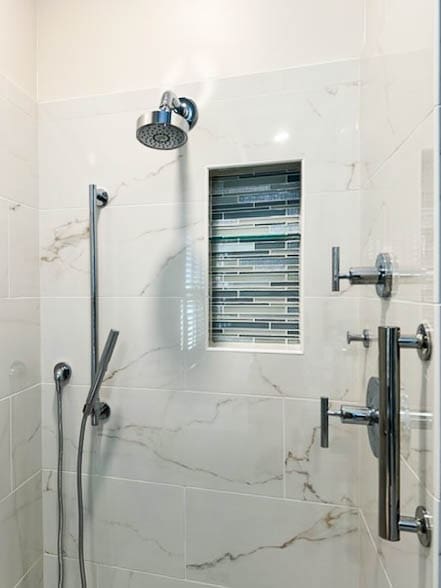
Niches, on the other hand, are built directly into the wall. They require more planning and labor—framing, waterproofing, and tile work—but they offer a cleaner, more integrated look and better long-term functionality.

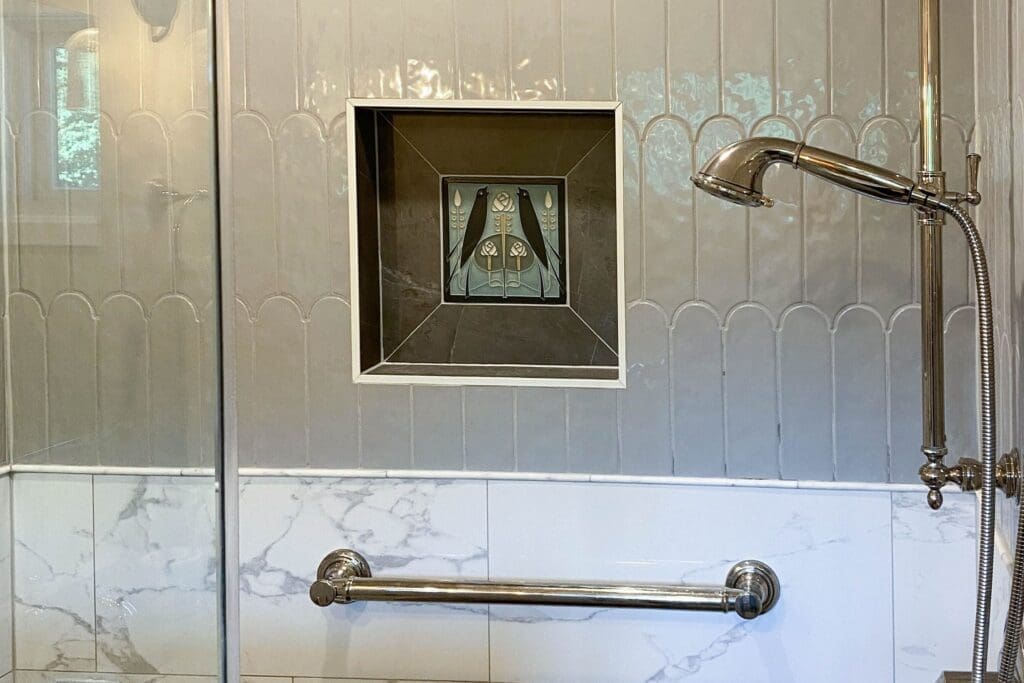
Why I Prefer Niches
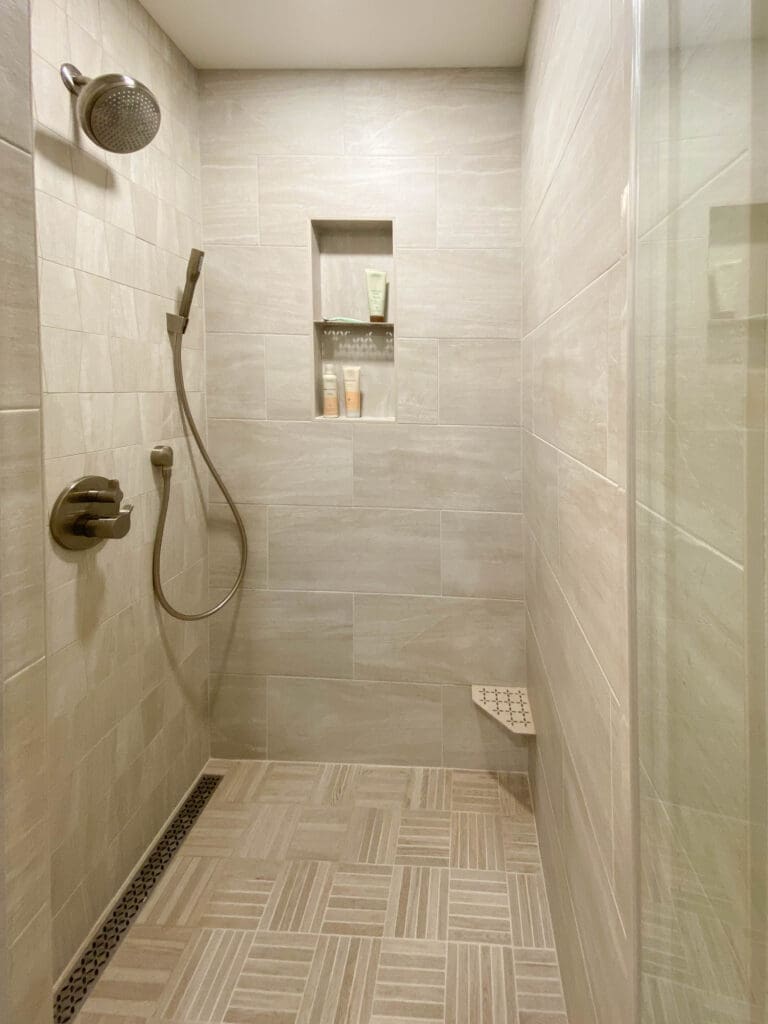
Personally, I lean toward niches whenever possible. They’re recessed, so nothing sticks out into the shower space. That means no bumping your arm or head on a shelf, and everything feels cleaner and more intentional. They’re also fully customizable. You can size them, position them, and design them around how you actually use your shower.
Choosing the Right Location
Placement is where design and practicality really come together.
As a general rule, it’s best to position your niche away from the direct water stream. This helps keep your items from getting constantly soaked. Of course, that’s not always possible—especially with framing limitations, shared walls, or concrete walls. In those cases, you simply work within the constraints.
One recommendation I stand by: avoid placing a niche on your main decorative accent wall. A beautifully tiled niche looks great—until it’s filled with colored bottles, razors, and soap. It can quickly take away from the overall design. Instead, place it somewhere less immediately visible.
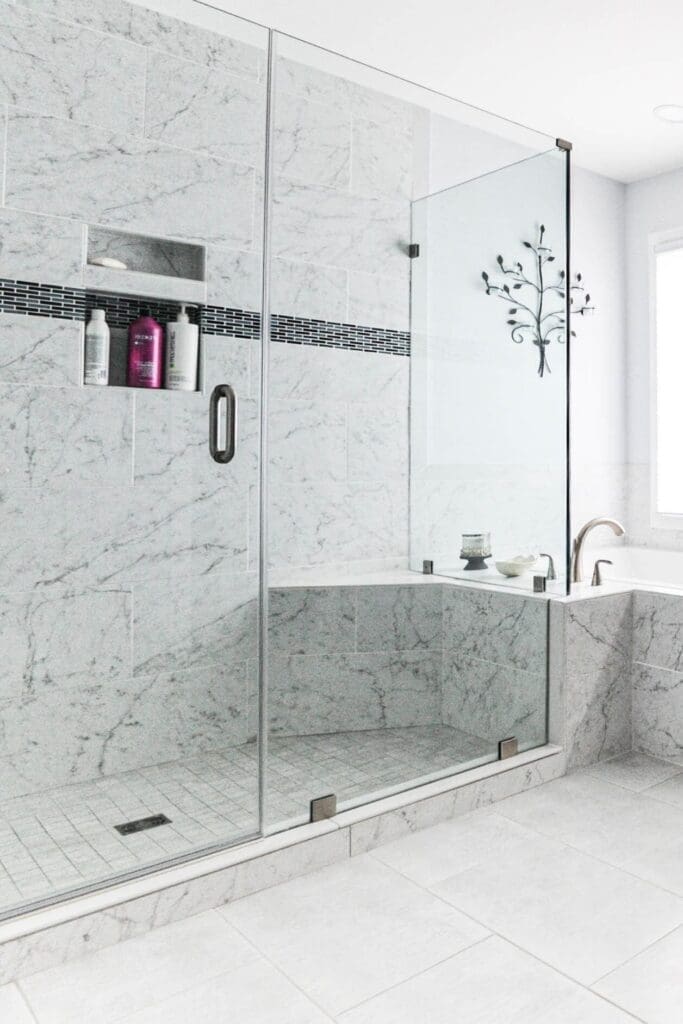
Installing a Niche on a Plumbing Wall
If your layout requires placing a niche on the same wall as your shower plumbing, there are a couple of important considerations:
Make sure the bottom of the niche is sloped slightly so water drains properly (no “birdbath” effect).
Be prepared for additional plumbing work. The pipe from the valve to the showerhead may need to be rerouted around the niche.
Sizing Your Niche
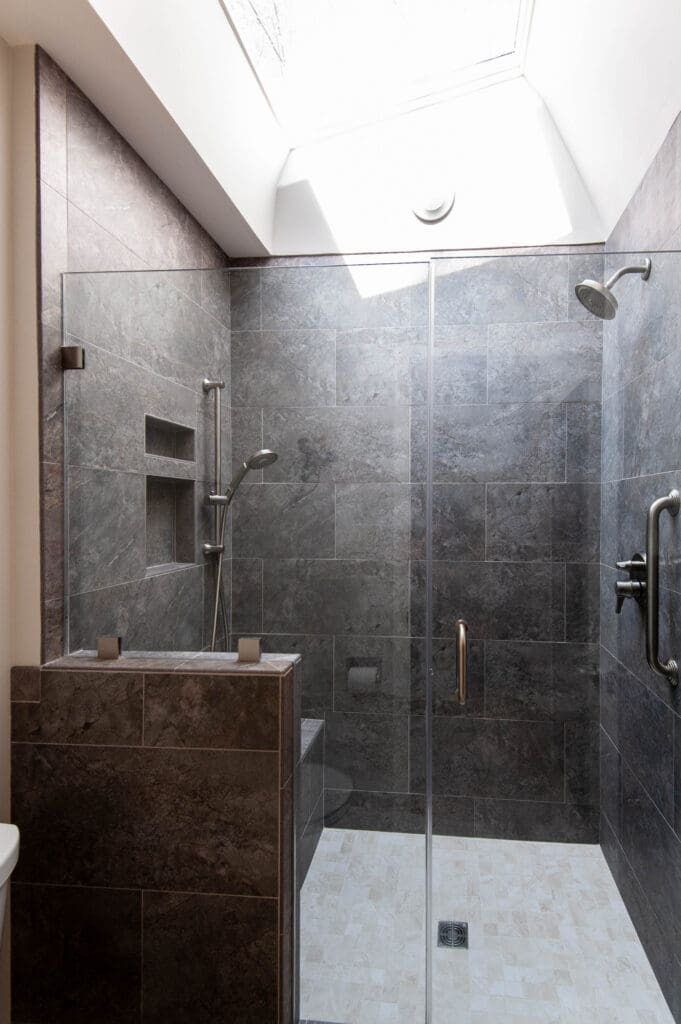
A good rule of thumb:
Plan for about 3–4 inches of width per bottle
A 12-inch-wide niche typically holds 3–4 bottles comfortably
Height matters too. A standard 12-inch height works for most products, but if you’re using taller pump bottles, you may need 14–16 inches—which usually means going custom.
Also think about how many people are using the shower.
In shared showers, it often makes sense to:
Increase overall width (12–24 inches or more)
Or install separate niches for each user
Standard vs. Custom Niches
Prefabricated niches are a great option and commonly come in sizes like:
12″ x 12″
12″ x 20″
12″ x 24″
12″ x 28″
They’re waterproof, tile-ready, and can be installed vertically or horizontally.
Custom niches, while more labor-intensive, give you complete flexibility—especially if you need extra height, unique proportions, or a specific design feature.
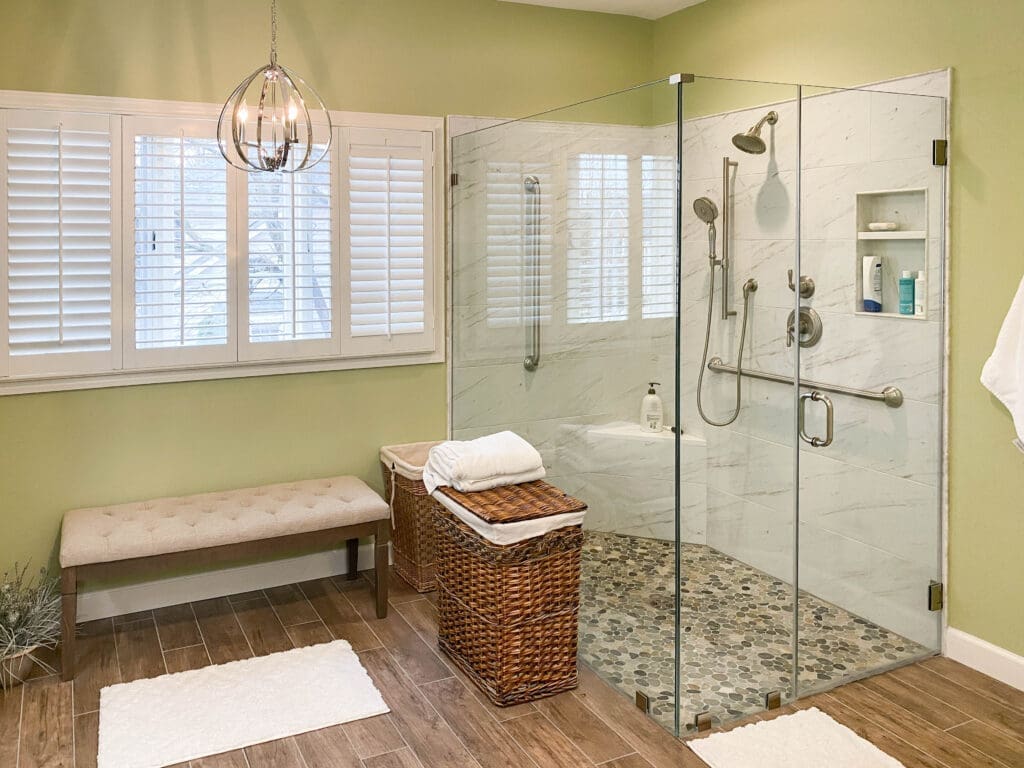
Design Options & Creative Ideas
There’s a lot you can do to elevate the look of a niche:
Shelving options
Tiled dividers (clean and seamless)
Tempered glass shelves (light and modern)
Stone shelves (match your curb or countertop; keep thickness around ¾”)
Large-format niches
A wider niche (even wall-to-wall) can create a strong design feature.
Layered designs
Offset or staggered shelving can add visual interest and improve organization.
Accent integration
While some people like carrying accent tile into the niche, I generally avoid it due to visible cut edges. A cleaner look often wins here.
A Hidden Bonus: Built-In Footrest
One feature people don’t always think about—a niche can double as a footrest.
Install a smaller niche about 12–20 inches off the floor, and it becomes a convenient place to prop your foot for shaving or washing—without adding anything that sticks out into the space.
Cost Considerations
Budget always plays a role:
Corner shelves: Lower cost, quick install. (Often under an hour.)
Niches: Slightly higher material cost plus additional labor for framing, waterproofing, and tiling.
That said, if you’re already remodeling your shower, the added cost of a niche is usually well worth it for the long-term functionality and cleaner look.
Final Thoughts
At the end of the day, shower storage should be both practical and intentional.
Think about:
Who’s using the space?
What you’re storing?
Where water will hit?
How visible the storage will be?
A well-designed niche doesn’t just hold your shampoo—it elevates the entire shower. And with a little planning upfront, you can create something that looks great and works even better.
703-866-4224
info@selectkitchenandbath.com